
Stewardship
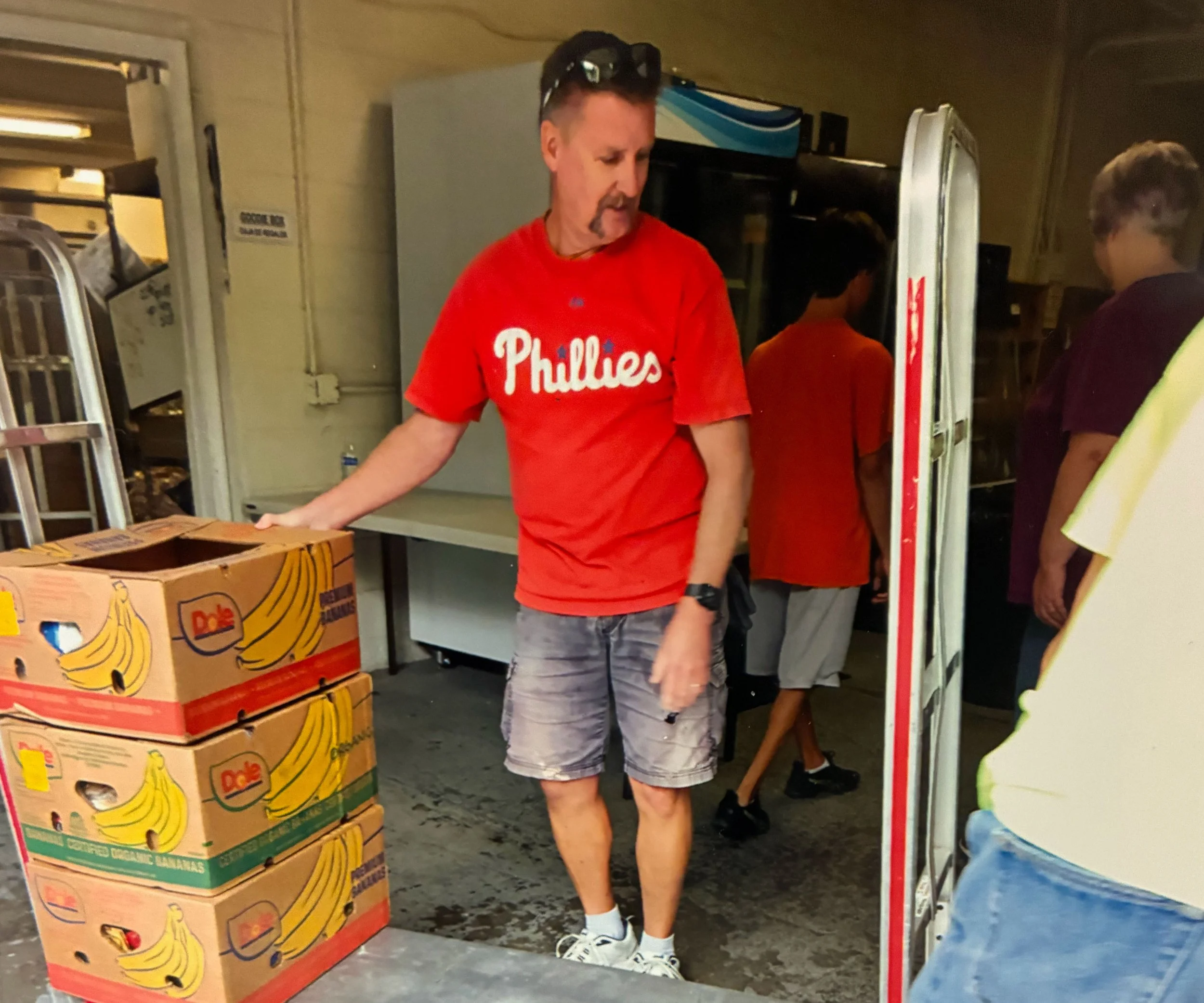
The OSLC Stewardship Committee has completed the process of reviewing what missions and ministries we will support in 2026, that involves our prayers, financial support, and people who connect to the mission. New ideas and recommendations are always welcomed; please contact the church office at oslc.lcms.2800@gmail.com.
You can access a copy of the Stewardship Participation Form and Pledge Form in the Members Only area.
Stewardship News - October 2026
CCAP Holiday Donations
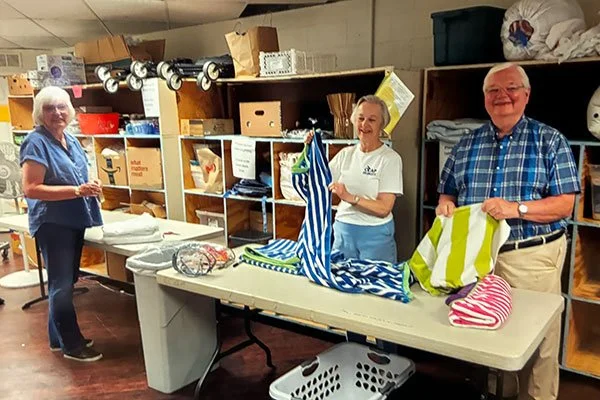
Donations for Thanksgiving and Christmas dinner food boxes for CCAP Winchester clients are requested. A list of the items needed is provided on the large table in the narthex. Please place your donations in the designated boxes beneath the large table in the narthex by Sunday, November 8th.
CCAP Winchester Update
CCAP Winchester is no longer accepting summer clothing because of limited storage space, but the following items are now needed: fall/winter clothing infant-to-adult sizes; tennis shoes (all sizes); men’s jeans and T-shirts; women’s jeans (sizes 2 through 6); sweatpants and sweatshirts for all; fall jackets and hooded sweatshirts for all; new socks and underwear for toddlers through adults sizes; men’s belts and women’s purses; adult backpacks; clean new or gently used sheet sets, blankets, bath towels, hand towels, and washcloths; individual baby wipe packs and diapers (sizes 2-6); hygiene products for babies and adults; Tampax tampons, adult disposable underwear (all sizes), and incontinence pads. Please place your donations in the CCAP box in the narthex
The OSLC CCAP POC is Nancy B.

Eyeglasses Needed
The Lions Club has a box in the Fellowship Hall to recycle and donate usable eyeglasses.
Recycle Bags
There is a box in the Fellowship Hall to collect plastic bags for recycling. The proceeds are used to help the community.
Food Insecurity
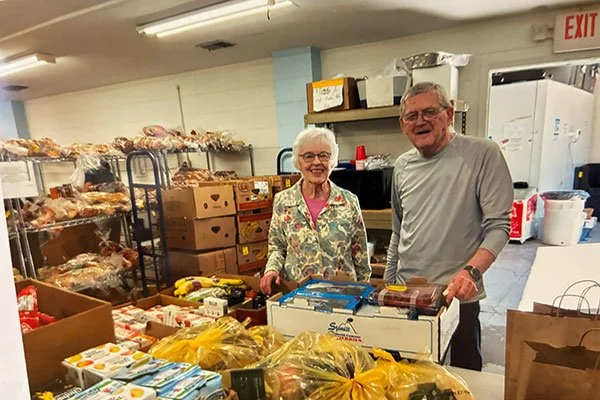
Food insecurity is increasing in our area. CCAP Winchester always has needs for the following staples to replenish diminishing supplies and meet increasing demands: spaghetti sauce/diced tomatoes (cans only), spaghetti, canned/pouch chicken, rice, cereal, shelf-stable juice and milk, crackers, baby food/formula, Ramen cup- a-soup, mac and cheese cups, canned fruit, salt and pepper, and ketchup. Please place your donations in the “Food drive for CCAP” boxes beneath the large table in the narthex.
Evangelism News
A HUGE Thank You for your support of the Evangelism Ministry. Through your generosity, 21 boxes were collected for Operation Christmas Child and 21 children somewhere in the world will have gifts at Christmas and an opportunity to know Jesus. Samaritan’s Purse adds to each box, a book called The Greatest Gift introducing the children to Jesus. They also offer The Greatest Journey, a 12-lesson discipleship course. Children who participate in the program learn how to follow Christ and share Him with others. As they do, entire families and communities are transformed by the power of the Gospel, and churches are started. Thank you again for helping to spread the Good News of Jesus!
The Lutheran Church—Missouri Synod
LCMS Stewardship Ministry—Newsletter Articles, October 2026
LCMS Family Ministry
“Worship the Lord with gladness; come before him with joyful songs” (Psalm 100:2 NIV)
The Bible is filled with places that praise God and talk about singing songs of praise. The Psalms in particular are full of this. We have a God who has done it all for us, and so we can respond with praise. We have a rich tradition of songs and hymns that praise our God. Many of these songs and hymns can help to teach the Christian faith, especially since songs are an easy way to learn and memorize. Little children learn songs easily and often these songs that we learn when we are very young are the ones that stay with us when we grow old. Parents can encourage children to sing by singing in church or by playing music at home or in the car that praises God and teaches the Christian faith.
LCMS Stewardship
It’s in the Way that You Use It
Originally Published October 2023
Consider the humble baseball bat. It is a simple tool designed for a complex task. The batter needs a tool that can consistently deliver force to a small ball which may be thrown at over 100 miles per hour, but which might also come slanting across the plate as a slow curve. For a game like this, the founders of baseball had to redesign the old cricket bat, which is more of a flat paddle. The tool had to fit the job.
But even a specially-designed tool can be used for a different purpose. It turns out that some years ago in England, the home of cricket, baseball bats suddenly started selling like hotcakes. What were folks across the pond doing with all those baseball bats? Using them as clubs in riots!
A tool can be used, and it can be misused. It’s all in the way that you use it.
The same is true with the things of God. The Second Commandment states that we should “not misuse the name of the Lord.” In the Small Catechism, Luther goes on to tell us exactly what this misuse is, as well as the proper use:
“We should fear and love God so that we do not curse, swear, use satanic arts, lie, or deceive by His name, but call upon it in every trouble, pray, praise, and give thanks.” (SC I)
The Lord has given us His name: He has placed it upon us in Holy Baptism and He has invited us to pray to Him as our Father. In this sense, the Lord’s name is something for us to use. We should not misuse it … and we should not fail to use it. The Pharisees of old were so afraid of misusing the name of God that they decided to simply never say the name of God (YHWH, Jehovah) at all! This non-use is just as bad as misuse. The Lord gives His gifts for our use.
A Christian steward is one who is called to use all of God’s gifts for His purposes. This includes things like the Name of God, the Sacraments and the Word, and it also includes things like our family and friends, our talents and skills, our money and resources. Everything that God has given to you, He has given to you so that you may be blessed to use it for His kingdom.
It’s all in the way that you use it!
LCMS Church Worker Wellness
October is Church Worker Appreciation Month! There are countless ways for individuals to express appreciation and for congregations to show love and gratitude for their church workers. Here are simply a few ideas: Pray for your pastor, deaconess, Lutheran school teachers and other called church workers serving in your midst. Write a handwritten note of encouragement. Give a gift — whether big or small, a simple gesture of remembrance goes a long way. For even more specific ideas, visit thelc.ms/appreciation. What a gift when congregation and church workers mutually encourage each other, so that the Gospel may spread and that faith my grow among us all (Romans 1:12).

“White-Water Leadership In Uncertain Times”
By Rev. Travis Guse, Mission Engagement Facilitator
SED Central Region, LCMS
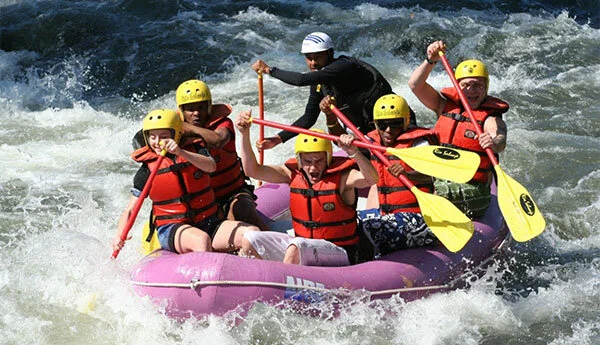
In my younger days, I used to do a lot of white-water rafting. For three summers in college I had the chance to guide rafts of campers from Lutheran Camp Perkins down the Salmon River just north of Stanley, Idaho. Also, for a few summers, I would guide a family raft down the Snake River between Jackson Hole and Alpine, Wyoming during summer vacation. These are some of my fondest memories as a young adult and into the middle years of my life. There is nothing like enjoying the day floating the river and shooting the rapids!
Recently, I’ve been doing a lot of reflecting on those moments on the river as I shelter-in-place here at home, longing for those adventures once again. As I have, I can’t help but think about what lessons I learned on the river and how they relate to this moment we are in due to this Covid-19 pandemic. What I would like to do is share some reflections from those experiences of river guiding that I hope will be a blessing to you as you seek to navigate your ministry during these challenging times.
Lesson #1 – Know Your End Destination
As you prepare to float the river, you need to know where your destination will end. This is important so that you can make sure to have a vehicle and trailer there to pull your boat out at the end of your trip. You also need to know where your destination will end so that you are able to know where you are on the journey and can pace yourself appropriately. And most importantly you need to know where the trip will end because it gives hope to those who may be a little nervous about white-water rafting that they will not be on river forever. Their trip will eventually come to an end. Having the end in mind puts the whole experience within a much needed context.
In times of crisis knowing where your destination will end is also vital. While we don’t know exactly how long we will have to deal with this Coronavirus outbreak and the related economic downturn we are facing in our nation, we do know where the ultimate destination ends for all of us. That destination is eternity in the arms of Jesus our Savior. It is eternity assured through faith in Jesus and all the he did for us by His life, death and resurrection that gives us hope in the midst of uncertain times. Jesus says to us all, “In this world you will have trouble. But take heart! I have overcome the world.” (John 16:33) It is this hope in Christ and the hope of life eternal that gives us hope amidst the turbulent times we find ourselves in today.
Lesson #2 – You Are Not Fully In Control
When floating a river, it is essential to remember that you are not entirely in control. Yes, for the most part you have the ability to navigate which part of the river you want to be in at any given moment. However, it is the river that has a power of its own that takes you where it will. You can navigate it, but you can’t control it. There were times I can remember that the headwinds were so strong floating the Snake River that if we didn’t keep rowing we would just be stuck in place due to the calmness of the water. There were other times that even when I tried to row to get the raft to go in a certain direction, the rapids were so strong that I was really just along for the ride. Yet, even when you are not fully in control, it is important to reflect a non-anxious presence throughout because if you freak out, then those with you in the raft will become fearful as well.
When it comes to leadership there are many things under our control that we can have influence over. Yet, in the midst of crisis moments like this Covid-19 pandemic, it is important to recognize that there are things that are simply beyond our control. At times of being stuck in our homes, it seems like it takes everything we have to make any headway because of a lack of motivation. At other times it seems as if things are so completely out of our control. Try as we might, we need to recognize we are just along for the ride. However, there is One who is in control of all things – Jesus! In Matthew 8:23-27 we are reminded that as the disciples were freaking out amid a storm that they had no power over, Jesus was asleep in the back of the boat, exemplifying a non-anxious presence for He was in control of the wind and the waves. While we may not fully be in control in times like what we are experiencing with this health crisis, we can reflect a non-anxious presence in our leadership because we have faith in the One who controls all things. It is in moments like these that we need to simply “Let go and let God.”
Lesson #3 – There Are Multiple Good Ways Forward
One of the joys of white-water rafting is there are multiple good ways forward. Now granted, some paths down the river are not as good as others. There are times you get caught in an eddy that is difficult to escape. At other times there are stretches of the river that are slow and missing any action. And at other times there are parts of the river you don’t want to get into because it is shallow and you can bottom out your raft. However, for the most part, there are many ways down the river in which you will get a good ride. True, some are better than others, especially when you hit that big rapid dead on. Yet, for those who aren’t thrill-seekers, you can still enjoy the rafting without hitting the biggest rapids and still have a good time.
While it might be difficult to think creatively during a crisis, there actually can be multiple ways to move forward in response. True, not every option is a good option and so critical evaluation is needed before proceeding. However, oftentimes there is more than one good way to proceed as well. For example, during this current health crisis it has been amazing to see all the creative responses when it comes to worship. As congregations were forced to shut down their public worship services, many congregations took different approaches to meet the spiritual needs of their members. Some went the route of drive-in worship and drive-thru Communion. Others pre-recorded their worship services and posted them on YouTube, while others live-streamed their worship via their website or Facebook Live. And still others used online platforms like Zoom to meet together for worship. Many ministries found the right way to respond that worked for them within their context.
Lesson #4 – It Takes A Team Effort
Unless you are kayaking, running the rapids on the river is a team effort, especially in a raft. While a river guide does paddle and navigate, their job is so much more. It is their role to read the river and then give instructions to the rest of the group in the raft on how to paddle as well. Some basic commands are “All full”, “Right full, left back”, “Left full, right back”, or “all back”. This is the way you navigate a river as a team to put yourself in position for the best ride down the rapids. It takes everyone doing their part as a group. As a result, communication is vital for good teamwork to take place. It takes both a common language to navigate as well as trust in what the river guide is communicating to the team.
The same is true when it comes to leadership in uncertain times – it is a team effort! If it is just you on your own, it is one thing. However, if you are leading a team, your role is more than just working harder. It takes working smarter, which means relying on your team to work with you rather than trying to do everything yourself. Your essential role as a leader is to read the context like a river guide reads the river, especially in VUCA moments – those times filled with Volatility, Uncertainty, Complexity, and Ambiguity. It is this adaptive leadership that your church needs most from you in the face of a crisis. Also, just like white-water rafting, clear communication is crucial for a group of individuals to work together as a cohesive whole. A common language for communicating and trust in your leadership abilities are a key to facing any challenge.
Lesson #5 – You Never Know What’s Around The Next Bend
One of the truths about white-water rafting is you never know exactly what’s around the next bend in the river. This is especially true the first time you guide a river. There is a major learning curve to being a river guide. There are stretches of river that are calm and there are stretches that have rapids. And it’s not just one set of rapids, but usually multiply sets to navigate – some class 1s which are easy, some class 2s or 3s which are moderately difficult but fun, and occasionally some class 4s or 5s which are challenging for even the best guides. The higher the number of classification the better the ride and the more dangers to navigate! Even if you are an experienced river guide and think you know the river well, the reality is you never run the same river twice. The stretch of river you float in the early summer is very different from the late summer. A rain storm the night before can radically change the flow of the river overnight. Being able to read the river and adapt accordingly is the key to being a good river guide.
As leaders, we are currently navigating some waters we have not experienced for a long time as the Church. This health crisis has forced us to adapt to the challenges that came upon us with little warning. And even if we think we’ve mastered this last set of months, that doesn’t mean we are fully prepared for what lies ahead. Our hope and prayer is that it will be calm waters before us as we begin to develop our re-open plans for public worship and use of our church buildings. However, circumstances could change rapidly if we have another wave of Covid-19 in the Fall. And while the economy is preparing to reopen, it is right on the edge between a recession and a depression. While it is good to plan and strategize, adaptive leadership is vital so that we remain flexible for what might come next. As Proverbs 19:21 reminds us, “Many are the plans in a person’s heart, but it is the LORD’s purpose that prevails.”
Lesson #6 – Watch For Rocks
A critical challenge when white-water rafting as a guide is to watch for rocks. Rocks can not only hang you up and spin you around, but they also can do a lot of damage to your raft. On one trip back on the Salmon River we hit a rock that ripped out the entire bottom of our raft. We were still able to finish floating the river, however, it was a little scary seeing water on the inside of the raft and not just outside. Sometimes your role as a guide is not just trying to avoid the rocks, but deciding which ones you are going to hit that will cause the least amount of damage to the raft and those who are along for the journey with you. However, not all rocks are bad. Usually along any stretch of river, there is almost always a jumping rock where the water is calm and you can spend some time relaxing and swimming.
When navigating in uncertain times as a leader you’ve also got to watch for the rocks! Rocks come in all shapes and sizes, and they can sometimes appear suddenly without warning. Part of your role as a leader is navigating your church to avoid the rocks if at all possible. However, it is not always possible to avoid all the dangers that uncertain times present. Sometimes it is more about how you deal with the challenges when you do hit a rock. And like white-water rafting, the key might be how to navigate in such a way that it causes the least amount of damage to the ministry. However, there is good news for all of us as ministry leaders. We can always find rest in Jesus, our solid Rock. In Him we can be refreshed before setting out again to navigate the challenges ahead.
Lesson #7 – If You’re Going To Fall, Fall Into The Raft
Before floating the river there are always a couple of rules that I would go over with the group going with me. The first, have fun! The second was a little more serious – if you are going to fall, fall into the raft. There are times that the rapids can be a bit intense and throw you around. The danger is when you fall out of the raft, you don’t want to get smashed against the rocks. We had one white-water trip in which we lost three kids overboard all at once, as well as the two of us who were guiding the raft. We got all the kids back in safely, but my fellow river guide got smashed between the raft and some rocks. While banged and bruised up a bit, he was ok. However, it could have been much worse. A good rule of thumb is that it is always better to fall into the raft rather than fall into the river.
Throughout history the Church has always been viewed as a boat in the midst of the raging water of the world. In crazy and turbulent times it is always good to know that there is safety and security by being in the boat. Sometimes as leaders we are bound to fail during a crisis. It is easy to get knocked around ourselves and sometimes even get bruised up a bit. In those times it is important to remember that if we are going to fall, fall into the boat. There we find those who can gently restore you, offer us God’s forgiveness in Christ, and encouragement to get back in our position of leadership again. Sometimes the greatest growth happens when we fail and fall during times of crisis. Yet, there is no better place to fall than into the arms of Christ in the places He promises to meet us – in the Word and Sacraments, as well as in the encouragement that comes from fellow believers as we carry each other’s burdens. (Gal 6:2)
Lesson #8 – Embrace The Ride
The last lesson from my time as a white-water guide is to embrace the ride. The ones who don’t enjoy a trip down the rapids are usually those who tend to have control issues. They become fearful when things get a little chaotic on the river. Having clear expectations on a white-water trip are important. You will get wet! You will feel out of control! You may even fall into the river! These are the realities of white-water rafting. In response you have two choices. You can either fight it and allow fear to grip you or you can embrace the ride. Yes, there are dangers on the river and it is essential to know those going in. However, when you embrace the ride, it can be a fun-filled and enjoyable experience. So much so that looking back, you will remember it as one of the best experiences of your life.
As we seek to lead our people during these uncertain times due to this current health crisis, it is important to remember that they may be feeling fear and uneasiness. That may also be what you are feeling as well due to this experience. It has tossed and turned you. It has stripped away many of the things that you have found comfort and security in. It has moved you way beyond your comfort zone. There are two choices we as leaders have in response. We can either fight it, which will not make for an enjoyable experience. Or, we can embrace the ride. If we look at this experience through the eyes of faith we will discover hidden blessings abound. And, through the eyes of faith we will also see that God is moving in the hearts and minds of so many who don’t know Him to open up their hearts spiritually for a word of hope. What an amazing time we live in during all this uncertainty to be the conveyers of the Good News of the Gospel. There are Kingdom opportunities all around us! So, relax in the arms of Jesus, the captain of our faith, and enjoy the ride!
Run the Race
“Let us throw off everything that hinders...and let us run with perseverance the race marked out for us.” (Hebrews 12: 1b), exhorts the writer to the Hebrews. Perseverance is the key in our race. Scripture challenges us to stand firm, knowing that our labor for God is not in vain. We're commanded to hold fast to our faith and to keep God's ways. As we run the race with perseverance, we are filled with “inexpressible and glorious joy” (1 Peter 1:8)in our Savior in Whom we believe, even though we haven't seen Him. Although the race is long and difficult, we have an eternal goal and consider any suffering or distress but "light and momentary troubles" (2 Corinthians 4: 17).
Prayer:
“Then you will call upon me and come and pray to me, and I will listen to you.”
— Jeremiah 29:12
*Last updated October 30, 2023